

Drive north on York Road past the last shopping centers and the last traffic lights, past the horse farms and the stone walls and the villages with names that sound like they belong in an English novel, and you’ll arrive at Parkton—the northernmost community in Baltimore County, where Maryland meets Pennsylvania at the Mason-Dixon Line and the rolling farmland climbs toward an elevation of nearly 1,000 feet. This is the Hereford Zone at its most authentic: corn and soybean fields stretching to the horizon, cattle grazing in open pastures, the Gunpowder River winding through wooded valleys, and a pace of life that moves with the seasons rather than the stock market.
Parkton is not a suburb. It is an agrarian community that has been farming, milling, and shipping its products to Baltimore since a woman named Margaret Parke laid off the first building lots from her father’s land in the 1850s. It is where Hereford High School anchors a school system that families across Baltimore County covet. It is where Prettyboy Reservoir protects 7,380 acres of watershed that doubles as one of the most beautiful natural landscapes in the state. And it is where buyers who are looking for the real thing—land, privacy, clean air, and a community that still knows what it means to be a neighbor—find exactly what they’ve been searching for.
A Farmer Named Parke and a Railroad That Changed Everything: The History of Parkton
Parkton takes its name from Margaret Parke, who inherited land from her father James Calder and began selling building lots around 1854. But the community’s roots reach deeper into Baltimore County’s agricultural past. Long before Parke subdivided her inheritance, farmers in this northernmost stretch of the county were raising wheat, corn, and oats, breeding cattle, and producing milk and cream for the Baltimore markets. A grist mill—Roser’s—and a small paper mill processed local products. York Road, one of Maryland’s first public turnpikes, passed directly through the community, and a tollgate was established in 1859.
Two transformative events shaped Parkton’s development. The first was the completion of the York-Town Turnpike in 1810, which formalized the road connection between Baltimore and south-central Pennsylvania and made Parkton a natural waypoint. The second—and more consequential—was the extension of the Baltimore and Susquehanna Railroad to the area in 1838. That railroad would become the Northern Central Railroad in 1854, and it transformed Parkton from an isolated farming settlement into a major shipping point for milk, grain, and wood products headed to Baltimore’s growing markets.
The railroad didn’t just move goods—it moved people. In the 1875 to 1910 era, Parkton grew into a village of some distinction, and the daily commuter train to Baltimore became a way of life for residents. The legendary “Parkton Local” carried passengers on a one-hour-and-ten-minute journey that passed through the quaint villages of White Hall, Monkton, Sparks, Ashland, Cockeysville, Ruxton, and Lake Roland before arriving 28 miles later at Calvert Station in downtown Baltimore. A Pennsylvania Railroad 66 passenger-baggage, diesel-electric motor car made the daily run. The final Parkton Local departed on June 27, 1959—the end of an era that residents still speak about with reverence. When Hurricane Agnes destroyed the tracks in 1972, the railroad’s 134-year run through northern Baltimore County came to a permanent close. Today, that rail bed carries hikers and bikers on the NCR Trail—a different kind of journey, but one that passes through the same beautiful countryside.
What Makes Parkton the Hereford Zone’s Most Authentic Rural Community?
The Land: Farmland, Forests, and an Elevation That Changes Everything
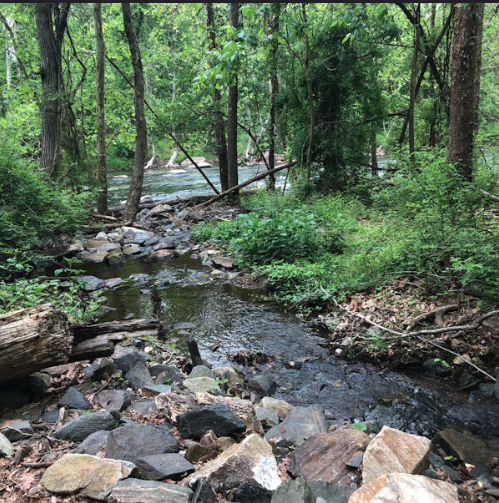
Parkton’s physical setting is unlike anywhere else in Baltimore County. Sitting at the county’s northern border, the land climbs steadily from the valleys of the Gunpowder and its tributaries toward an elevation approaching 966 feet at the Mason-Dixon Line—the highest point in the county. That elevation creates a genuine microclimate: summers are noticeably cooler, winters bring more snow (and more school closures), and the air quality is markedly better than in the southern suburbs, thanks to the absence of industrial pollution and the prevailing westerly winds that sweep across the Piedmont. The landscape is dominated by agricultural fields—corn, soybeans, and other crops—interspersed with forested hillsides, stream valleys, and the open pastures of working cattle and horse farms. It is a landscape that feels more like central Pennsylvania than metropolitan Baltimore, and that is precisely the point.
Hereford High School: The Heart of the Community
If Parkton has a civic center, it is Hereford High School. Home of the Bulls, Hereford High is far more than a school—it is the social, athletic, and cultural anchor of the entire northern Baltimore County community. The school is known for its agriscience program, which connects students directly to the agricultural heritage of the Hereford Zone. Its football team is a state-level powerhouse. The annual Bull Run Cross Country Invitational is one of the largest cross-country running events on the East Coast, drawing teams from across the region. The Hereford Theatre program and the Hereford Ladies Faire and Chamber Choir have won numerous state and regional awards, adding cultural richness to a school known primarily for its academic excellence. Students at Hereford High consistently perform among the top in Baltimore County, and the school’s combination of strong academics, competitive athletics, and agricultural programs makes it a uniquely well-rounded institution.
The full Hereford Zone school pipeline—Sparks Elementary, Hereford Middle, and Hereford High—is among the most coveted in the state of Maryland, and homes within the zone consistently command a premium.
Prettyboy Reservoir: 7,380 Acres of Protected Beauty
Prettyboy Reservoir sits just west of Parkton, impounding the Gunpowder River behind a scenic dam that has been a Baltimore County landmark since its completion in 1933. The reservoir and its surrounding watershed protect 7,380 acres of forests, meadows, and stream valleys—a vast natural preserve that ensures Parkton’s western landscape will remain undeveloped and beautiful in perpetuity. The reservoir area is open to hiking, bird watching, horseback riding, nature photography, and archery hunting during regulated seasons. The views from Prettyboy Dam are among the most breathtaking in all of Baltimore County, and for Parkton residents, this protected wilderness is measured not in drive-time minutes but in steps out the back door.
The NCR Trail: World-Class Recreation at Your Doorstep
The North Central Railroad Trail passes through the Parkton area on its 20-plus-mile route from Ashland to the Pennsylvania state line, where it connects to the 20-mile York County Heritage Trail and continues all the way to the city of York. For Parkton residents, the trail is a daily amenity for hiking, biking, jogging, and horseback riding through the Gunpowder Falls valley. The old Northern Central Railroad right-of-way—the same route that carried the Parkton Local for over a century—now carries families, athletes, and nature lovers through some of the most scenic countryside on the East Coast. Birders have documented over 96 species along the Parkton section of the trail alone.
Horse Country and Agricultural Heritage
Parkton sits at the northern end of Baltimore County’s equestrian corridor, and the community’s agricultural character is not a historical footnote—it’s a living reality. Working farms produce corn, soybeans, and livestock. Horse properties with barns, paddocks, and pastures are woven throughout the landscape. The strict zoning laws of the Hereford Zone prohibit most planned community developments, ensuring that the large-lot, agricultural character of the area is preserved. For buyers who want a working farm, a horse property with trail access, or simply acres of open land under a wide sky, Parkton offers what no suburban community can.
Community Character: Small-Town Values, Real Neighbors
Parkton’s community life reflects the values of a place where people depend on each other. Graul’s Market in Parkton serves as an everyday gathering point, offering the same quality groceries and prepared foods that have made the Graul’s name synonymous with neighborhood markets across Baltimore County. Volunteer fire companies, church communities, and agricultural organizations provide the social infrastructure of daily life. The New Hereford Volunteers—a local civic group—have been instrumental in preserving and celebrating the community’s history, including the placement of historical markers along the NCR Trail. This is a community where people show up for each other—at the harvest, at the fire hall, at the Friday night football game—and that mutual investment is the foundation of everything that makes Parkton special.
Location: The Edge of the County, Not the Edge of the World
Parkton sits 18 miles from Towson and approximately 28 miles from downtown Baltimore, at the intersection of York Road (MD-45) and Middletown Road near the Pennsylvania state line. I-83 is accessible within minutes via exits at Hereford or Mount Carmel Road, putting Hunt Valley about 20 minutes south and downtown Baltimore about 35 to 40 minutes away. The Light Rail terminus at Hunt Valley provides transit access to downtown Baltimore and BWI Airport. Hunt Valley Towne Centre—with Wegmans, national retailers, and restaurants—is the primary commercial hub for Parkton residents. For those who commute to the I-83 corridor, Towson, or Baltimore, the drive is scenic and surprisingly manageable. And for professionals who work remotely, Parkton offers the kind of distraction-free, nature-immersed setting that makes working from home feel like working from a retreat.
Parkton Real Estate: Farmland, Acreage, and the Hereford Zone Premium
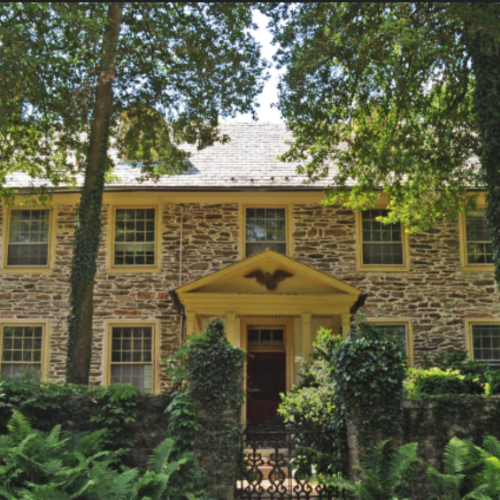
The Parkton housing market is defined by land and authenticity. Homes here sit on lots measured in acres—often multiple acres—and the housing stock reflects the area’s agricultural heritage: solid farmhouses, brick and stone Colonials, Cape Cods, ranchers, and custom-built homes designed to take advantage of panoramic views and private, wooded settings. Prices range from the low $300,000s for smaller homes and properties needing renovation to $700,000 and above for larger estates, horse properties, and homes on premium acreage. Working farms and large parcels of open land are occasionally available, commanding prices that reflect both agricultural value and the Hereford Zone school premium.
Parkton’s strict zoning ensures that the community’s density remains among the lowest in Baltimore County, and the combination of Hereford Zone schools, Prettyboy Reservoir’s protected watershed, the NCR Trail, agricultural heritage, and the elevated microclimate creates a value proposition that is genuinely one of a kind. For buyers who understand that the land is the asset—that the view from the kitchen window matters as much as the kitchen itself—Parkton is one of the most compelling opportunities in the entire Baltimore region.
Ready to Explore Parkton?
At The Balcerzak Group, we understand Parkton and the Hereford Zone in a way that only deep local knowledge can provide. We know the farm properties, the school boundaries, the reservoir easements, the trail access points, and the subtle distinctions between Parkton’s neighborhoods that make each property unique. Whether you’re searching for a horse farm with open pastures, a stone farmhouse on ten acres, a custom home overlooking the Gunpowder valley, or simply want to experience what life at the top of Baltimore County feels like, we’re here to guide you.
Browse current Parkton listings, request a free home valuation, or reach out to start a conversation. Margaret Parke started selling lots here in the 1850s, and the land has been drawing people ever since. We’d love to help you find your place in it.
Click here for current Parkton Homes for Sale!
— The Balcerzak Group —
Your Local Baltimore County Real Estate Experts
Check out this article next