

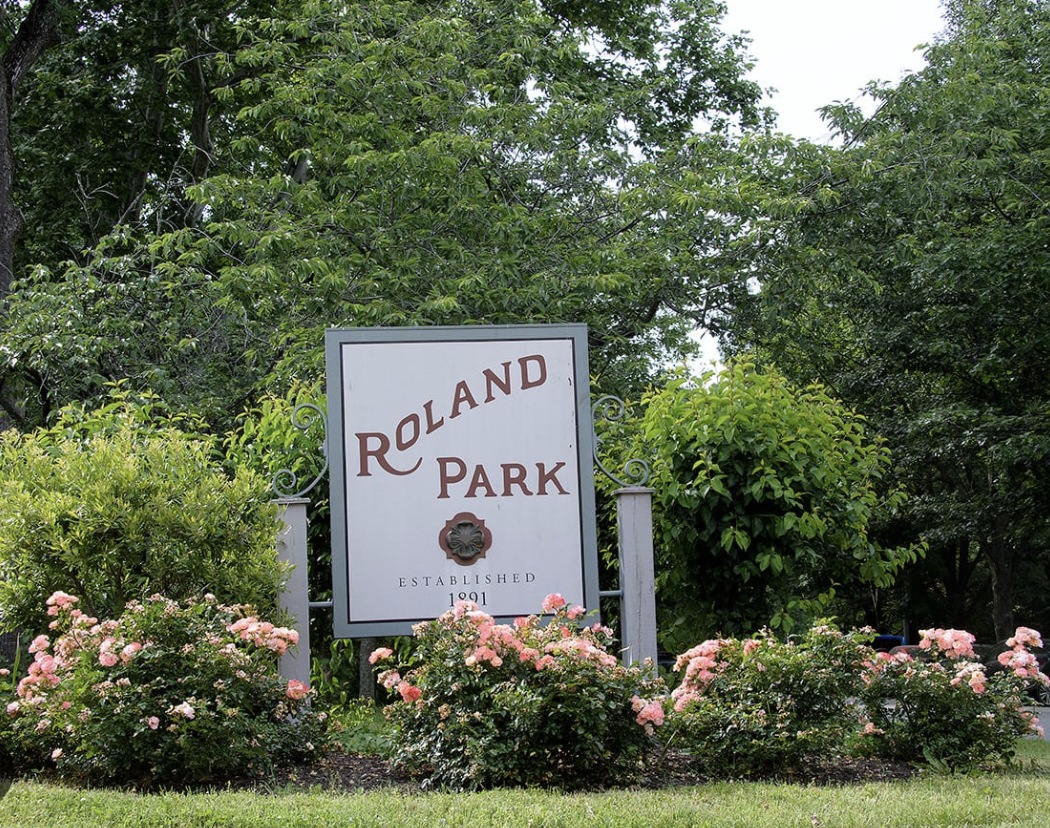
When real estate developers across America needed a model for how to build a residential community—one that worked with the land rather than against it, that prioritized beauty and livability alongside commerce—they looked to Roland Park. Founded in 1891 and designed in part by the Olmsted Brothers, the same firm behind New York’s Central Park, Roland Park is one of the earliest and most influential planned garden suburbs in the United States. It set the template that thousands of communities would follow, and more than 130 years later, it remains one of the most beautiful and desirable neighborhoods in Baltimore.
With roughly 2,500 homes spread across rolling, wooded hills, 316 acres of parkland along Stony Run, America’s first planned shopping center, a community pool, world-class private schools within walking distance, and an average household income exceeding $224,000, Roland Park is not just a neighborhood—it’s a landmark in the history of American residential design. And yet, for all its architectural and historical significance, residents describe it the same way: it feels like a small town where everyone knows each other, hidden in the middle of a major city.
The Birthplace of the American Garden Suburb: The History of Roland Park
Roland Park’s story begins in 1891, when the Chicago investment firm of Jarvis and Conklin purchased 500 acres of hilly, wooded land near Lake Roland and founded the Roland Park Company with $1 million in capital. When the Panic of 1893 forced the original investors to sell, the firm of Stewart and Young took over and hired Kansas City developer Edward H. Bouton as general manager—a decision that would prove transformative, not just for Baltimore, but for American residential development as a whole.
Bouton was a visionary who believed that a residential community should be more than a collection of houses on a grid. He hired George Edward Kessler to lay out the first tract of lots, then brought in the Olmsted Brothers to design the second tract. Frederick Law Olmsted Jr. took the lead and immediately recognized the site’s challenging terrain—steep slopes, ravines, and dense woodland—not as a liability but as an extraordinary asset. Rather than leveling the land, Olmsted chose to preserve the surrounding forests, route roads along the natural contours of the hills, and create cul-de-sacs at hilltops that rewarded homeowners with spectacular views. The result was a neighborhood that felt like it had always been there—organic, naturalistic, and utterly unlike the rigid grids of the city below.
Bouton insisted on high-quality, architecturally controlled construction. The earliest homes were brown-shingled, faintly Richardsonian frame structures, but the neighborhood quickly evolved to include English Tudor half-timber mansions, stuccoed villas with steeply pitched roofs and picturesque gables, Georgian and Regency Revivals, and original designs influenced by the British Arts and Crafts movement. Some of Baltimore’s most distinguished architects worked in Roland Park, including the firms of Wyatt and Nolting, Palmer and Lamdin, Ellicott and Emmart, and Charles A. Platt. The Roland Park Company also pioneered community governance innovations that were revolutionary at the time: deed restrictions on incompatible uses, a community association that maintained public amenities, and mandatory indoor plumbing and sanitation standards decades before the rest of Baltimore adopted them.
By the time Roland Park was annexed by Baltimore City on January 1, 1919, the neighborhood had become a national model. Olmsted Jr. cited it to his Harvard School of Design students as an exemplary residential subdivision. Jesse Clyde Nichols, the developer of Kansas City’s famous Country Club District, drew direct inspiration from Roland Park. Duncan McDuffie, developer of San Francisco’s St. Francis Wood, called it an ideal residential district. The Roland Park Company went on to create Guilford and Homeland as sister communities, extending the same design philosophy across North Baltimore. Today, Roland Park is listed on the National Register of Historic Places.
What Makes Roland Park One of America’s Great Neighborhoods?
An Olmsted Landscape That Feels Like a Private Forest
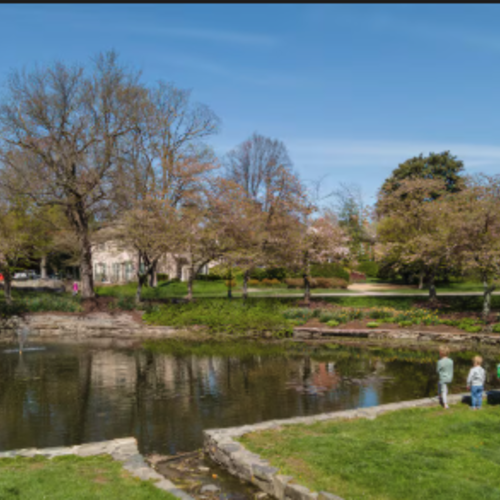
The most striking thing about Roland Park—the quality that makes first-time visitors catch their breath—is how it feels. The Olmsted Brothers’ commitment to preserving the natural landscape means that even today, Roland Park is a neighborhood of towering old-growth trees, steep wooded hillsides, winding streets that follow ridgelines, and sudden, unexpected views. It’s remarkably un-urban for a community that sits squarely within city limits, just seven miles from downtown Baltimore and the Inner Harbor. The 316-acre Stony Run Park runs through the neighborhood, offering a playground, dog-friendly walking trails shaded by a dense canopy, athletic fields, and fishing spots. The curvilinear street design naturally slows traffic and creates quiet, intimate blocks that feel tucked away from the world.
Architecture That Spans 130 Years of American Design
Roland Park’s housing stock is a living encyclopedia of American residential architecture. The earliest homes from the 1890s include shingle-style and Queen Anne designs. Turn-of-the-century construction introduced poured concrete homes with colored tile insets, red-tiled roofs, and chimney pots. The 1910s and 1920s brought English Tudor half-timber mansions, Georgian Revivals, Colonial Revivals, and Arts and Crafts homes inspired by the British movement championed by Gustave Stickley. Later decades added Cape Cods, center-hall Colonials, and mid-century designs. Through it all, the Olmsted landscape—mature trees, naturalistic plantings, and careful grading—unifies the entire community. Homes range from charming porchfront rowhouses and smaller Colonials to grand estates on half-acre lots, providing a breadth of options that few neighborhoods can match.
America’s First Shopping Center and a Village Feel
The Tudor-style Roland Park Shopping Center, built in the 1890s, holds a remarkable distinction: it is widely recognized as one of the first planned shopping centers in the United States. Today, it remains the walkable commercial heart of the neighborhood. Eddie’s of Roland Park, the beloved local grocery store, has been a community staple for decades. Petit Louis Bistro draws diners from across Baltimore for its refined French-inspired cuisine, and Johnny’s next door is a neighborhood favorite for inventive seafood. The Roland Park branch of the Enoch Pratt Free Library serves as a community gathering spot, and the Roland Park Pool draws families all summer long. For a broader shopping and dining experience, Belvedere Square is just minutes away, and downtown Towson is a short drive north.
World-Class Schools Within Walking Distance
Few neighborhoods in America can match Roland Park’s educational offerings. On the public side, Roland Park Elementary/Middle School is one of Baltimore City’s strongest, earning a B-plus from Niche and serving as one of three Ingenuity Project middle schools for advanced math and science. For private education, the options are extraordinary: Gilman School (A-plus, all-boys pre-K–12), Roland Park Country School (A-plus, all-girls K–12), Bryn Mawr School, Friends School of Baltimore, Cathedral School, and Boys’ Latin School are all within or adjacent to the neighborhood. Johns Hopkins University’s Homewood campus, Loyola University Maryland, and Notre Dame of Maryland University are all within a mile. For families who prioritize education, Roland Park is simply unmatched.
A Literary Neighborhood with a Famous Water Tower
Roland Park has its share of cultural landmarks and quirky character. The Roland Park Water Tower—a 148-foot octagonal Italianate structure built in the community’s early days to store spring water—has served as a beloved local landmark for over a century, though it has been empty since Baltimore switched to the reservoir system in 1930. Literature lovers will appreciate that the reclusive Pulitzer Prize-winning novelist Anne Tyler, one of America’s most celebrated authors, has set many of her novels in Roland Park—drawing on the neighborhood’s winding streets, established families, and small-town-within-a-city atmosphere as the backdrop for her fiction.
Location: Suburban Calm, Urban Access
Roland Park occupies a privileged position in North Baltimore, bounded roughly by Falls Road, Northern Parkway, Roland Avenue, Cold Spring Lane, and Stony Run. Charles Street and the communities of Guilford and Homeland lie to the east; Hampden and Remington are to the south. Interstate 83 provides a direct fifteen-minute commute to downtown Baltimore and the Inner Harbor, while the countryside of Baltimore County is fifteen minutes north. Towson is a short drive for shopping, dining, and county amenities. Multiple bus routes run along Roland Avenue and Charles Street, and the neighborhood’s walkable layout means many daily errands—groceries, library, dining, school drop-off—can be accomplished on foot.
Roland Park Real Estate: Legacy, Value, and Enduring Appeal
The Roland Park housing market reflects a neighborhood with over a century of desirability. With approximately 2,500 residences, the community offers a broader range of price points than many buyers expect—from condos and smaller homes starting below $200,000 to grand historic estates exceeding $1.5 million. The median home price currently sits around $600,000, with an average household income above $224,000. Over 84% of residents are homeowners, 87% are college graduates, and homes typically sell within about three to four weeks. The neighborhood’s deed covenants and active Roads and Maintenance Corporation ensure that the architectural integrity and park-like landscape that have defined Roland Park since 1891 are preserved for future generations.
For buyers, Roland Park offers something vanishingly rare: a National Register historic neighborhood designed by the Olmsted Brothers, with world-class schools, walkable daily amenities, and direct highway access to the entire Baltimore metro—all within city limits. Whether you’re drawn to a shingle-style home from the 1890s, a Tudor Revival with original half-timbering, a center-hall Colonial with a deep front porch, or a mid-century gem tucked into the hillside, Roland Park rewards buyers who appreciate history, craftsmanship, and community.
Ready to Explore Roland Park?
At The Balcerzak Group, we understand that buying a home in Roland Park isn’t just a real estate transaction—it’s a lifestyle decision. We know the blocks, the architecture, the schools, and the subtle differences between the original plats that give each section of the neighborhood its own personality. Whether you’re searching for your dream home on a wooded hilltop, looking for an entry point into one of America’s most celebrated neighborhoods, or wondering what your current Roland Park property is worth, we’re here to help.
Browse current Roland Park listings, request a free home valuation, or reach out to start a conversation. Roland Park has been setting the standard for American residential living since 1891—and we’d love to help you become part of its next chapter.
Click here for current Roland Park homes for sale!
— The Balcerzak Group —
www.thebalcerzakgroup.com
Your Local Baltimore County Real Estate Experts
Check out this article next